Request Capabilities & Pricing
Packaging Guide

Retail Snack Packaging Formats Explained

Choosing the right packaging format determines shelf performance, consumer experience, and production economics. This guide covers every major retail snack packaging format — from stand-up pouches to club store bags — with the technical detail you need to make informed decisions for your private label program.

Packaging Format Comparison

A side-by-side overview of the five primary retail snack packaging formats.

FormatSize RangeBest ForShelf PresenceRelative Cost
Stand-Up PouchSingle-serve – FamilyGrocery, convenienceHighMedium
DoypackMid-size – LargePremium, specialtyVery HighMedium-High
Club Store BagBulk / ValueWarehouse clubsMediumMedium
Multi-PackPortion packsSchools, e-commerceHighHigher
Pillow BagSingle-serve – MidValue, single-serveLowLow

Stand-Up Pouch Packaging

The stand-up pouch is the dominant packaging format for retail snacks sold in grocery stores, convenience outlets, and specialty food retailers. Its flat-bottom gusset allows the bag to stand upright on shelves, maximizing brand visibility and consumer recognition in competitive snack aisles.
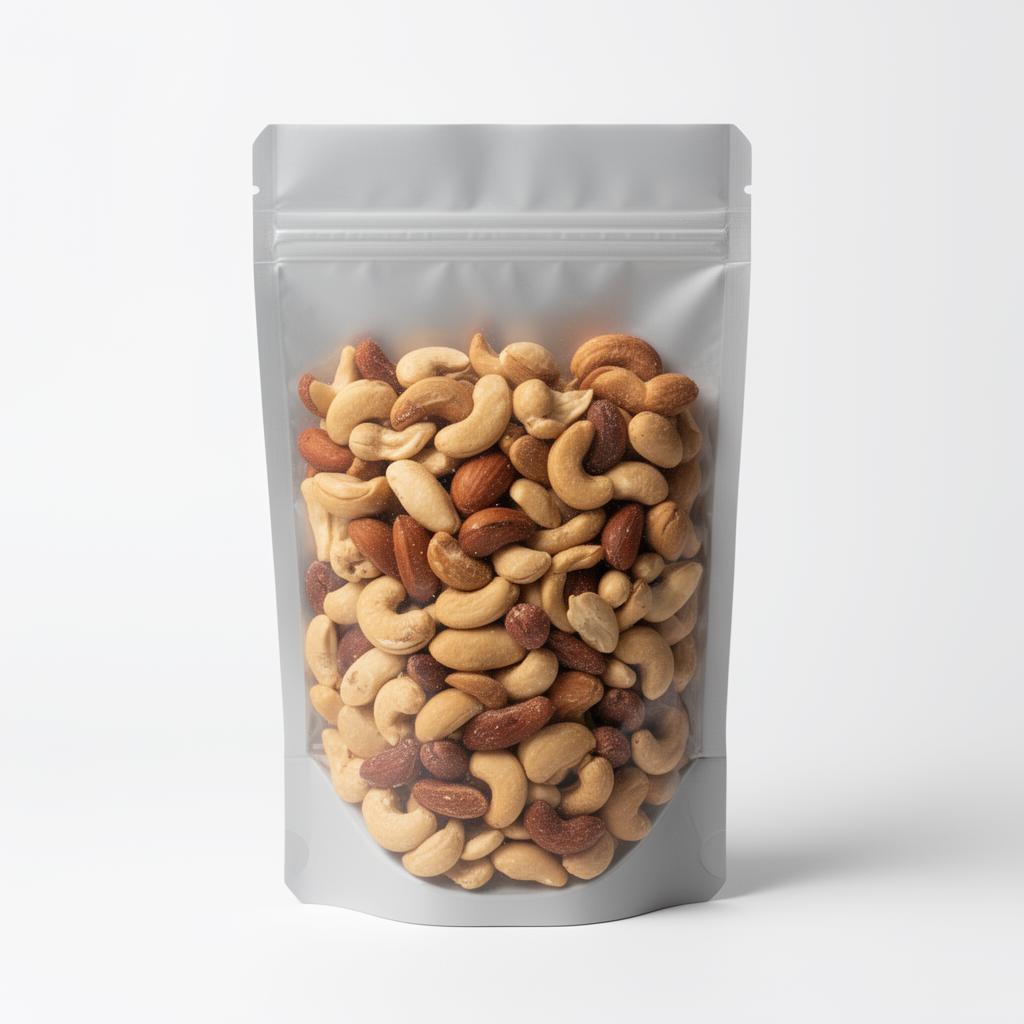
Stand-up pouch snack packaging with mixed nuts showing resealable zipper and shelf-stable design
Stand-up pouches offer maximum shelf stability and resealable convenience for retail snack programs.

Stand-up pouches are produced on automated packaging lines that handle weighing, filling, sealing, and lot coding in a single continuous process. This level of automation delivers consistent fill weights and seal integrity across high-volume production runs.

Resealable Zipper

Press-to-close or slider zippers extend product freshness after opening and improve consumer satisfaction.

Window Panels

Clear or matte window sections allow consumers to see the product inside, building purchase confidence at shelf.

Barrier Films

Multi-layer film structures provide oxygen, moisture, and light barriers that protect product quality throughout shelf life.

Size Flexibility

Available from single-serve grab-and-go to family-size formats, accommodating multiple SKUs from the same production line.

For brands launching their first retail snack product, the stand-up pouch is typically the recommended starting format. It offers the best balance of shelf presence, production efficiency, and consumer acceptance across all major retail channels.
Doypack Snack Bags

The doypack is a premium variation of the stand-up pouch that originated in European packaging design. It features enhanced structural rigidity, a wider bottom gusset, and a more pronounced three-dimensional shape on shelf. The term "doypack" is often used interchangeably with stand-up pouch in some markets, but in manufacturing it refers specifically to a format with superior structural properties.

Doypacks are particularly effective for premium and specialty snack positioning. The rigid structure holds its shape better than a standard pouch, creating a more substantial feel in the consumer's hand and a stronger visual presence on shelf. This makes it a preferred format for products positioned at higher price points — gourmet nut blends, specialty trail mixes, and premium chocolate-covered items.

Enhanced structural rigidity for premium shelf presence and consumer perception
Supports high-quality gravure and rotogravure printing for photographic brand imagery
Available with spouts, shaped windows, and custom die-cut features for differentiation
Wider bottom gusset improves standing stability for heavier fill weights
Compatible with nitrogen flushing and modified atmosphere packaging for extended shelf life

The tradeoff with doypacks is higher material and printing costs compared to standard pouches. The heavier film gauge, more complex construction, and premium printing capabilities add to per-unit packaging costs. For products where premium positioning justifies the investment, the doypack delivers measurable improvements in shelf appeal and consumer perception.

L'Orenta produces doypacks across multiple sizes and configurations. Our production facility runs both standard and premium pouch formats on the same automated lines, making it efficient to offer both within a single product portfolio.

Club Store Packaging Formats

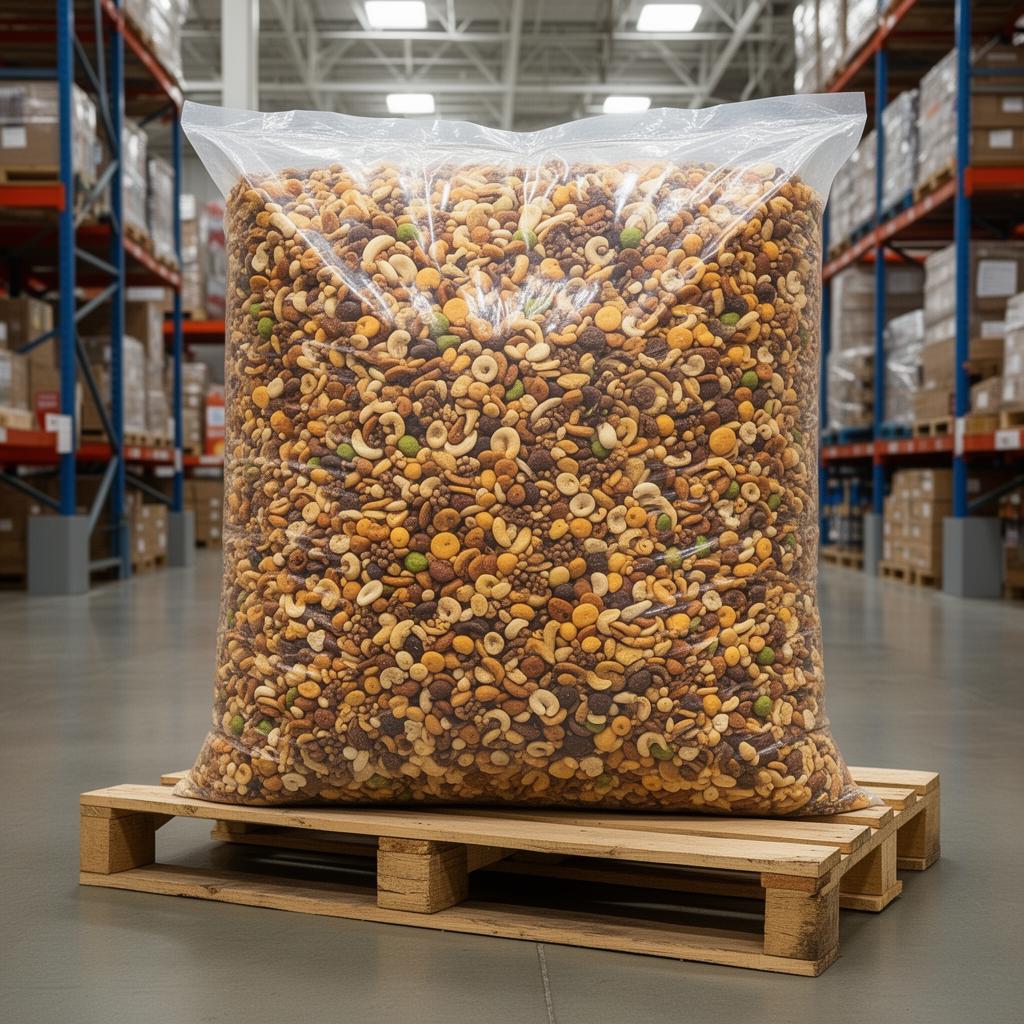
Club store packaging is designed for warehouse retailers like Costco, Sam's Club, and BJ's Wholesale Club. These formats are fundamentally different from standard grocery packaging — they are larger, heavier, and must meet retailer-specific requirements for case packs, pallet configurations, and display readiness.

Large club store snack bag on wooden pallet in warehouse distribution environment
Club store packaging uses heavy-gauge film and large formats designed for warehouse retail environments.

Typical club store snack bags use large-format sizing with heavy-gauge film that provides the durability needed for handling in warehouse environments. Unlike grocery formats where products sit on standard shelving, club store products are often displayed on pallets or in large bins, requiring packaging that withstands stacking weight and consumer handling without tearing or losing seal integrity.

Fill Weights

Large-format sizing standard, with custom configurations available

Case Packs

Retailer-dictated configurations, typically 6–12 units per case

Pallet Specs

Ti-Hi patterns specified by each retailer's DC requirements

Entering the club store channel requires a manufacturer experienced with the specific compliance requirements of these retailers. L'Orenta produces club store formats with automated case packing and palletizing that meets the exact specifications of major warehouse retailers. For details on our production capabilities, visit our packaging and automation page.

Multi-Pack Snack Packaging

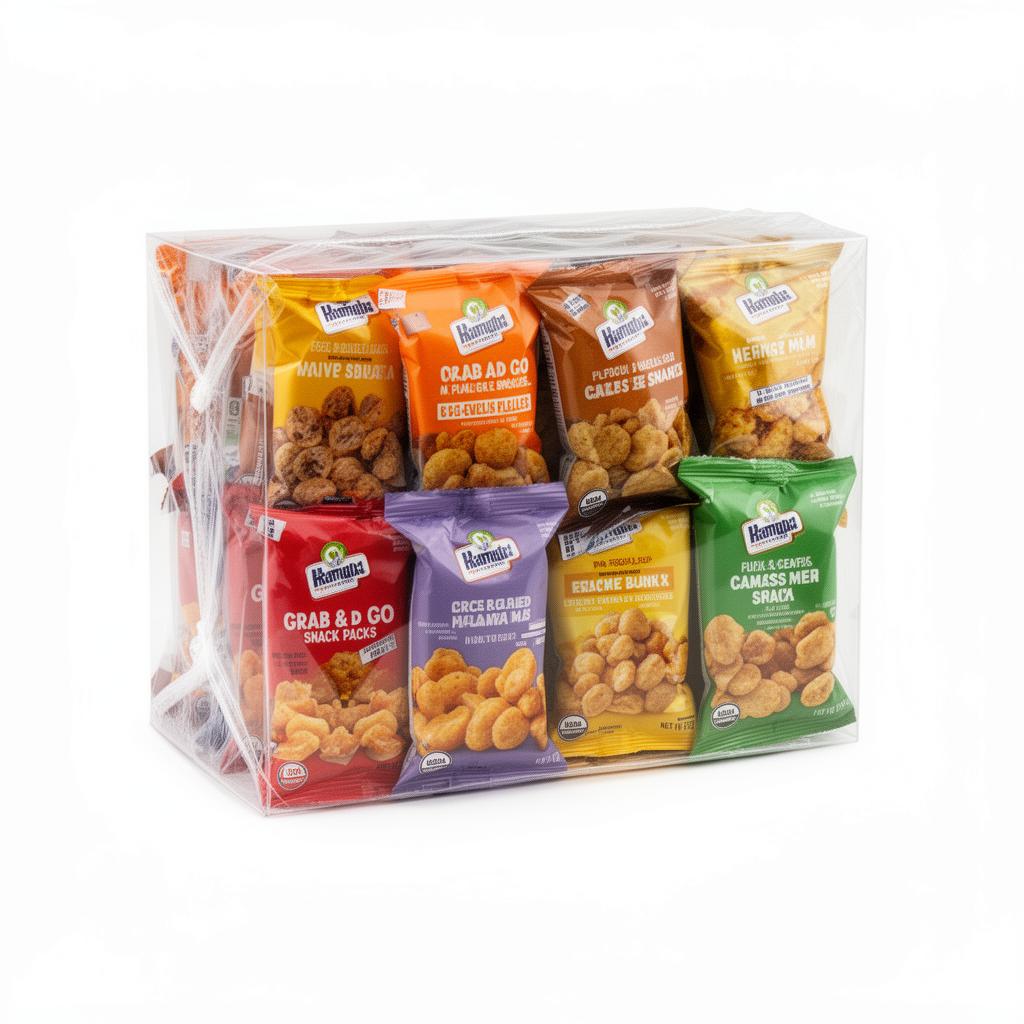
Multi-pack packaging bundles individual portion-controlled snack packets into a single retail unit. This format serves the growing demand for convenience, portion control, and variety — particularly for school lunches, office snacking, and e-commerce subscription programs.

Multi-pack snack packaging with individual portion-controlled snack bags bundled in retail overwrap
Multi-pack formats bundle individual portions for convenience store, school, and e-commerce channels.

Multi-pack production requires two packaging stages: primary packaging of individual portions and secondary packaging into the bundled retail unit. The primary packs are produced on high-speed automated packaging lines, then accumulated and wrapped or boxed on secondary packaging equipment. This adds complexity compared to single-bag formats but opens distribution channels that single bags cannot serve.

Common multi-pack configurations include various count bundles. Individual packs are portioned based on the product category and target consumer. Trail mix, nut blends, and dried fruit are the highest-volume multi-pack snack categories.

Multi-packs are also the fastest-growing snack format for e-commerce. The bundled format ships efficiently, provides a compelling per-unit value proposition, and offers variety within a single purchase. Brands selling through Amazon, direct-to-consumer websites, or subscription boxes often prioritize multi-pack development alongside their standard retail formats.

L'Orenta supports multi-pack production with automated portioning and bundling equipment. Our co-packing services include the full multi-pack workflow from individual packet production through secondary packaging and case packing.

Shelf-Ready Retail Packaging

Shelf-ready packaging (SRP), also called retail-ready packaging (RRP), refers to the complete system of primary packaging, case packing, and display configuration that allows a product to move from distribution center to store shelf with minimal handling. Major grocery retailers increasingly require SRP as a condition of vendor approval.

The concept goes beyond the individual bag or pouch. Shelf-ready means the case itself is designed to be cut open and placed directly on the shelf as a display unit, or the products inside are arranged to be front-faced immediately upon opening. This reduces labor at the store level and ensures consistent product presentation.

UPC barcodes scannable at POS systems
FDA-compliant nutrition fact panels with serving size data
FALCPA allergen declarations clearly displayed
Lot coding and date marking for full traceability
Case labels with item number, count, and weight information
Display-ready case construction for shelf merchandising
Pallet configurations per retailer DC receiving specifications
Product orientation marks for consistent shelf facing

Every product leaving L'Orenta's facility meets shelf-ready standards. Our automated lines handle the complete process — from raw ingredient intake through finished case-packed product — ensuring compliance with the labeling, configuration, and documentation requirements of major grocery retailers, convenience chains, and club stores.

For brands new to retail packaging requirements, our private label process includes full packaging compliance support as a standard part of the development workflow. Our team handles nutrition panel generation, barcode procurement, allergen review, and retailer-specific labeling mandates so your product arrives shelf-ready on the first production run.

Frequently Asked Questions

What is the most common snack packaging format for grocery stores?

Stand-up pouches are the most widely used format for retail snacks in grocery stores. They offer shelf stability, resealable convenience, and large print surfaces for branding. Available in a full range from grab-and-go single-serve to family-size formats.

What packaging format is used for club stores?

Club store packaging uses large-format bags with heavy-gauge film for durability. These require specific case pack configurations and pallet patterns dictated by the retailer.

Can L'Orenta produce multi-pack snack packaging?

Yes. Our automated lines produce individual portion-controlled packets that are bundled into overwrapped or boxed multi-packs. This format is common for school snacks, office vending, convenience store variety packs, and e-commerce bundles.

What compliance elements are required on retail snack packaging?

Retail-ready snack packaging must include UPC barcodes for POS scanning, FDA-compliant nutrition fact panels, allergen declarations per FALCPA requirements, lot coding, date marking, and any retailer-specific labeling mandates.

Related Services

Need Packaging for Your Snack Program?

Work with an SQF certified manufacturer that runs every major retail packaging format. From stand-up pouches to club store bags, we produce shelf-ready snack products at scale.

Typically responding within 24 hours · For qualified high-volume projects · Built for retail-ready production

Request Packaging Information